Ruqyah is not meant to be frightening, mysterious or dependent on a personality. At its simplest, authentic ruqyah is reciting Qur’an and sound supplications while asking Allah for protection and healing.
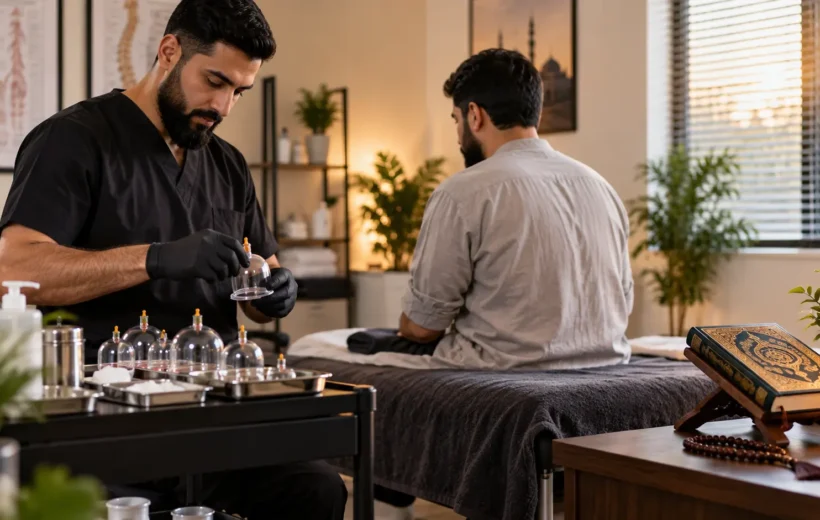
That matters because ruqyah is now surrounded by a great deal of social-media theatre: dramatic possession videos, secret formulas, fixed numbers with no evidence, “diagnosis” based on body reactions, expensive packages and fear-based claims that make people feel they cannot recover without a particular raqi.
The Sunnah is much calmer. The Prophet ﷺ used ruqyah, approved ruqyah that did not contain shirk, taught supplications for illness and pain, and used the Mu‘awwidhat for protection. Self-ruqyah is therefore not a lesser option. It is one of the clearest ways to keep your dependence upon Allah rather than upon a practitioner.
What is ruqyah?
Ruqyah is recitation or supplication used while seeking protection, relief or healing from Allah. It may be recited over yourself or another person. The important point is that the words and method must remain within Islamic limits.
In Sahih Muslim 2200, the Prophet ﷺ approved ruqyah so long as it did not contain shirk. That principle is the foundation of authentic ruqyah.
The Qur’an itself is described as healing and mercy for believers in Qur’an 17:82. This does not turn every verse into a secret ritual. It means the Qur’an is guidance, mercy and a means of healing by Allah’s permission.
Who actually heals?
Allah alone heals. Ruqyah is a means, not an independent force. This protects a Muslim from two opposite mistakes:
- treating ruqyah as superstition that has no place in Islam;
- treating a raqi, bottle of water, oil, amulet, recording or particular ritual as though it has power by itself.
The Prophet ﷺ used the supplication recorded in Sahih al-Bukhari 5675, asking Allah, the Lord of mankind, to remove harm and grant a cure. The focus is Allah, not the performance surrounding the ruqyah.
Can I perform ruqyah on myself?
Yes. There is no requirement that ruqyah must be performed by a specialist.
‘Aishah رضي الله عنها reported that the Prophet ﷺ would recite the Mu‘awwidhat and blow over himself during illness. She later recited them for him when his illness became severe. See Sahih al-Bukhari 5751.
Before sleep, he would cup his hands, recite Surah al-Ikhlas, Surah al-Falaq and Surah al-Nas, lightly blow into his hands and wipe over as much of his body as he could, repeating this three times. This is recorded in Sahih al-Bukhari 5017.
A simple Sunnah-based self-ruqyah routine
1. Begin with tawhid and sincere dependence on Allah
You do not need a special room, incense, a particular colour, a paid appointment or someone claiming unusual spiritual powers. Make du‘a to Allah and ask Him for protection and healing.
2. Recite Surah al-Fatihah
Al-Fatihah was used as ruqyah by a Companion for a man who had been stung, and the Prophet ﷺ approved what had been done. The report is recorded in Sahih al-Bukhari in the Book of Medicine. There is no need to invent a fixed number that the hadith itself does not specify.
3. Recite Surah al-Ikhlas, al-Falaq and al-Nas
These three surahs have a particularly clear place in the Sunnah for protection. At bedtime, recite them into your cupped hands, lightly blow and wipe over the body three times, as established in Sahih al-Bukhari 5017.
For morning and evening protection, the Prophet ﷺ told ‘Abdullah ibn Khubayb to recite al-Ikhlas and the two Mu‘awwidhat three times in the morning and evening. See Sunan Abi Dawud 5082, graded hasan.
4. Use the ruqyah taught by Jibril
When the Prophet ﷺ was ill, Jibril عليه السلام recited a ruqyah beginning:
بِسْمِ اللَّهِ أَرْقِيكَ
Bismillahi arqik…
Its meaning is to seek Allah’s protection and healing from what harms, including the evil eye. The wording is recorded in Sahih Muslim 2186.
5. For a specific place of pain, use the supplication taught by the Prophet ﷺ
Place your hand on the area that hurts. Say Bismillah three times, then say seven times:
أَعُوذُ بِاللَّهِ وَقُدْرَتِهِ مِنْ شَرِّ مَا أَجِدُ وَأُحَاذِرُ
A‘udhu billahi wa qudratihi min sharri ma ajidu wa uhadhir.
This means: I seek refuge in Allah and His power from the evil of what I feel and fear. The instruction is in Sahih Muslim 2202.
6. Keep your daily protection stronger than your fear
Ruqyah should not only begin after panic starts. Build the regular prophetic protections into daily life:
- al-Ikhlas, al-Falaq and al-Nas three times morning and evening;
- Ayat al-Kursi before sleep, as reported in Sahih al-Bukhari 5010;
- the last two verses of Surah al-Baqarah at night, Sahih al-Bukhari 5009;
- the bedtime Mu‘awwidhat routine;
- regular salah, Qur’an, dhikr and du‘a.
How long should self-ruqyah take?
There is no authentic rule that says every ruqyah session must last 45 minutes, 90 minutes or several hours. There is also no authentic rule that you must keep reciting until a dramatic reaction happens.
A short, consistent routine based on established recitations can be better than an exhausting ritual filled with invented steps. If you are ill, distressed or frightened, do what is manageable and keep asking Allah for help.
What authentic ruqyah does not require
You should be cautious when a practice is presented as “Sunnah ruqyah” but depends upon things for which no sound evidence is given. That includes claims that you must:
- recite a surah an invented number of times for a particular diagnosis;
- burn special papers, herbs or substances as a religious requirement;
- place salt in corners of the home;
- use mysterious symbols, squares, numbers or coded writing;
- learn the supposed name, religion or tribe of a jinn;
- force a jinn to “speak” through someone;
- be beaten, strangled, restrained or physically harmed;
- stop prescribed medicine because “medicine blocks ruqyah”;
- pay for repeated sessions because a practitioner says only they can remove the problem.
A practice being common in ruqyah circles does not make it Sunnah.
Is taking payment for ruqyah automatically wrong?
No. This point needs balance. In Sahih al-Bukhari 5737, the Prophet ﷺ approved payment connected to ruqyah with the Qur’an.
So charging money does not by itself prove that someone is a fraud. The concern is exploitation: guaranteed cures, endless paid sessions, fear-based upselling, secret rituals, pressure and dependency.
Ruqyah is not a diagnosis
A headache, nightmare, panic attack, relationship problem, seizure, intrusive thought, low mood or reaction during Qur’an recitation does not automatically prove evil eye, sihr or jinn possession.
Islam gives us ruqyah as a legitimate spiritual practice. It does not give ordinary people permission to label every unexplained symptom as supernatural.
If symptoms could have a physical or mental-health cause, use ruqyah and seek appropriate medical assessment. The Prophet ﷺ also encouraged treatment. Sahih al-Bukhari 5678 records that Allah has created treatment for disease.
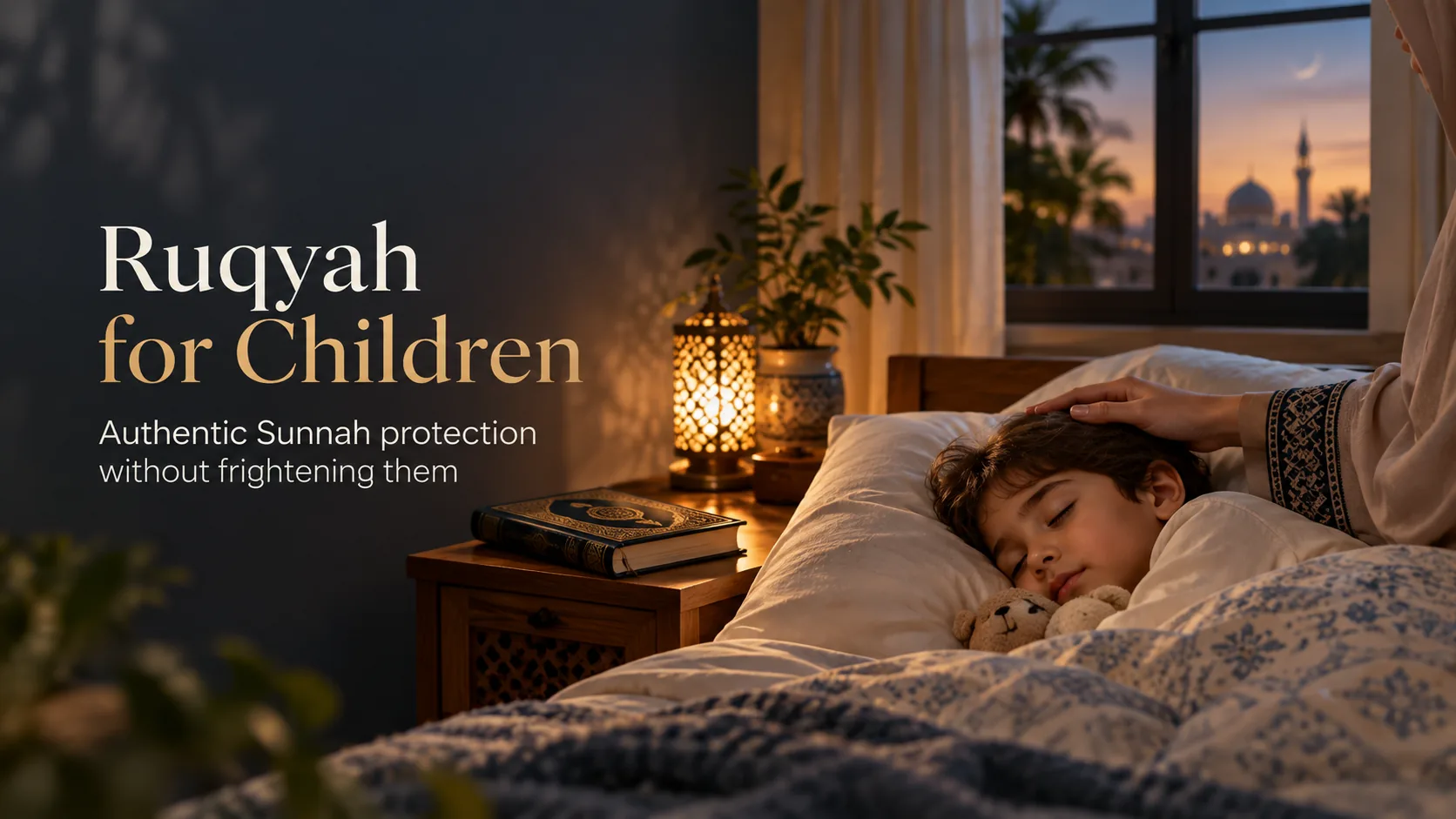
Ruqyah for children
The Prophet ﷺ used to seek Allah’s protection for al-Hasan and al-Husayn with the words:
أَعُوذُ بِكَلِمَاتِ اللَّهِ التَّامَّةِ مِنْ كُلِّ شَيْطَانٍ وَهَامَّةٍ وَمِنْ كُلِّ عَيْنٍ لَامَّةٍ
This asks refuge in Allah’s perfect words from every devil, harmful creature and harmful eye. See Sahih al-Bukhari 3371.
Children do not need to be frightened with stories about jinn. Protect them with Qur’an, du‘a and a calm home in which Allah is remembered.
When should you seek help from someone else?
If you want another Muslim to recite Qur’an and make du‘a for you, that is permissible. But a trustworthy person should bring you closer to Allah, not make you dependent upon them.
They should use clear Qur’an and supplications, avoid shirk and occult practices, respect Islamic boundaries, avoid physical harm and never claim certainty about the unseen.
Frequently asked questions
Do I need a raqi for ruqyah to work?
No. Self-ruqyah is established in the Sunnah and should be normalised.
Do I have to react physically for ruqyah to be working?
No authentic text makes a dramatic reaction a condition of ruqyah or a diagnostic test.
Can I listen to Qur’an recordings?
Listening to Qur’an is beneficial, but the clearest Sunnah examples of ruqyah involve actual recitation and supplication. Do not let a recording replace your own worship and du‘a.
Can ruqyah be used alongside medical treatment?
Yes. There is no need to create a false choice between seeking Allah through ruqyah and using lawful medical treatment.
Key sources
- Qur’an 17:82
- Sahih Muslim 2200
- Sahih al-Bukhari 5017, 5009, 5010, 5675, 5678, 5737, 5751
- Sahih Muslim 2186, 2202
- Sunan Abi Dawud 5082
- Sahih al-Bukhari 3371
Where an article discusses interpretation, diagnosis or medical safety, those points are separated from what the Qur’an and authentic Sunnah explicitly establish.
Continue: Read our authentic du‘a library, Qur’an resources and Start Here learning pathway.