




If you are not sure where to begin, begin here
If you have ever opened a dozen tabs about Islam, watched five short videos, heard three different opinions and ended up more confused than when you started, this section is for you. I want Start Here to feel like a calm route through the basics, not another pile of information.
You might be completely new to Islam. You might already be Muslim but feel that your foundations were never properly built. You might be returning after years of distance. You might simply be curious and want to understand what Muslims actually believe before forming an opinion. All of those are valid reasons to start.
I am not presenting myself as a scholar or using this section as a fatwa service. The aim is to explain the foundations clearly, link the evidence, distinguish basics from detailed scholarly questions, and help you know what to learn next.
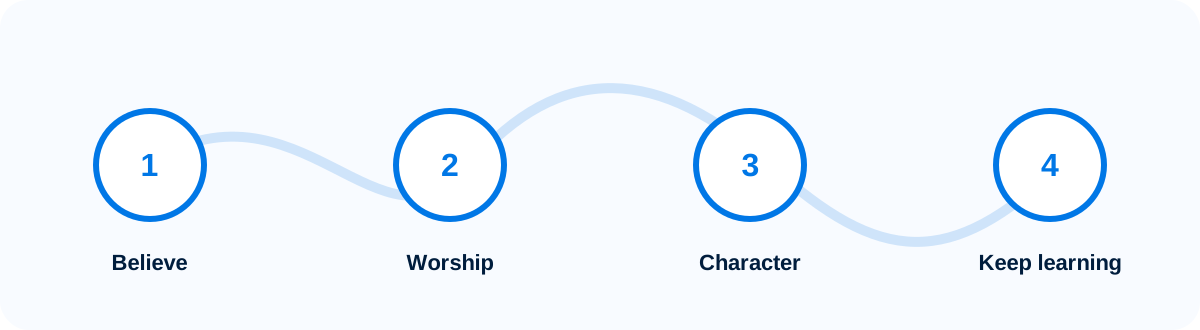
Choose the route that sounds most like you
I am completely new
Start with what Islam is, who Allah is, who Prophet Muhammad ﷺ is and what the Qur’an is. Do not rush into every secondary question at once.
I am returning to Islam
Refresh belief, rebuild salah, learn a simple daily routine and reconnect with Qur’an and du‘a. Consistency matters more than trying to transform everything overnight.
I know the basics
Use the guides on character, tawbah, tawakkul, digital life and practical worship to turn knowledge into habits and better decisions.
The foundation: what do Muslims actually believe?
Before learning dozens of rulings, it helps to understand the centre of Islam. Muslims believe in and worship Allah alone. We believe He sent guidance through His messengers, culminating in Prophet Muhammad ﷺ, and that the Qur’an is His revealed Book. Belief is not meant to sit in the head as information. It should shape worship, character, hope, fear, gratitude and the way we treat people.
Then learn the framework
The Five Pillars describe the major outward acts that structure Muslim life. The Six Articles of Faith describe the core beliefs of iman. Together they give you a map. They are not everything there is to Islam, but they stop the basics from feeling random.
Turn belief into a daily practice
The first practical skill most beginners need is purification and prayer. Do not be embarrassed if you are still learning movements, Arabic or timings. Every confident person you see praying had to learn at some point. Start with the core sequence, practise it, and keep improving.
If you are thinking about becoming Muslim
Do not wait until you know every rule. Islam begins with sincere belief and the testimony of faith. Learning comes after that and continues for life. If you are researching Islam seriously, read the Shahadah guide and the beginner guide, then speak to trustworthy Muslims or a reliable local mosque if you want practical support.
When motivation drops
One thing I want to normalise is that faith does not always feel emotionally intense. You may have an amazing week and then struggle. You may miss a routine you had built. You may feel guilty because other people appear more knowledgeable or consistent. The answer is not to disappear until you become perfect. Return, repent, simplify and continue.
Learn without getting overwhelmed
Social media can make Islamic learning feel like a never-ending stream of arguments, labels and reaction clips. A beginner does not need to master every debate. Learn the essentials, verify what you hear, ask qualified people when a question needs expertise, and give yourself time to grow.
Do not forget character
Islam is not only information and ritual. The Prophet ﷺ repeatedly connected excellence with good character. How we speak, keep promises, behave online, treat parents, handle anger, deal with neighbours and respond when wronged are all part of the person we are trying to become.
A simple first-month plan
- Week 1: Read What is Islam, Who is Allah and the Shahadah guide.
- Week 2: Learn wudu and the basic prayer sequence. Practise without expecting instant perfection.
- Week 3: Begin a small Qur’an routine and learn a few short du‘as.
- Week 4: Focus on one character habit and build a realistic daily routine around the prayers.
You do not have to finish the whole website before Islam starts benefiting your life. Learn something sound, act on it, ask Allah for help and keep moving.
Frequently asked questions
Do I need to know Arabic before I can start learning Islam?
No. Arabic becomes valuable for Qur’an and prayer, but you can understand the foundations in English while gradually learning the Arabic you need.
What if I feel behind compared with other Muslims?
Do not build your relationship with Allah around comparison. Start from where you are. A small consistent step taken sincerely is more useful than a burst of activity that disappears after a few days.
Where should I ask detailed religious questions?
For personal rulings, complex fiqh questions or situations involving important consequences, speak to a suitably qualified and trustworthy scholar who can understand the details.
What if I make mistakes while learning prayer?
Keep learning and correcting them. Beginners are beginners. Use reliable guidance, practise, and ask for help where needed rather than giving up because the process is imperfect.
- Sahih Muslim 8a, the hadith of Jibril summarising Islam, iman and ihsan.
- Sahih al-Bukhari 8, Islam is built on five.
- Qur’an 2:2, the Qur’an as guidance for the God-conscious.