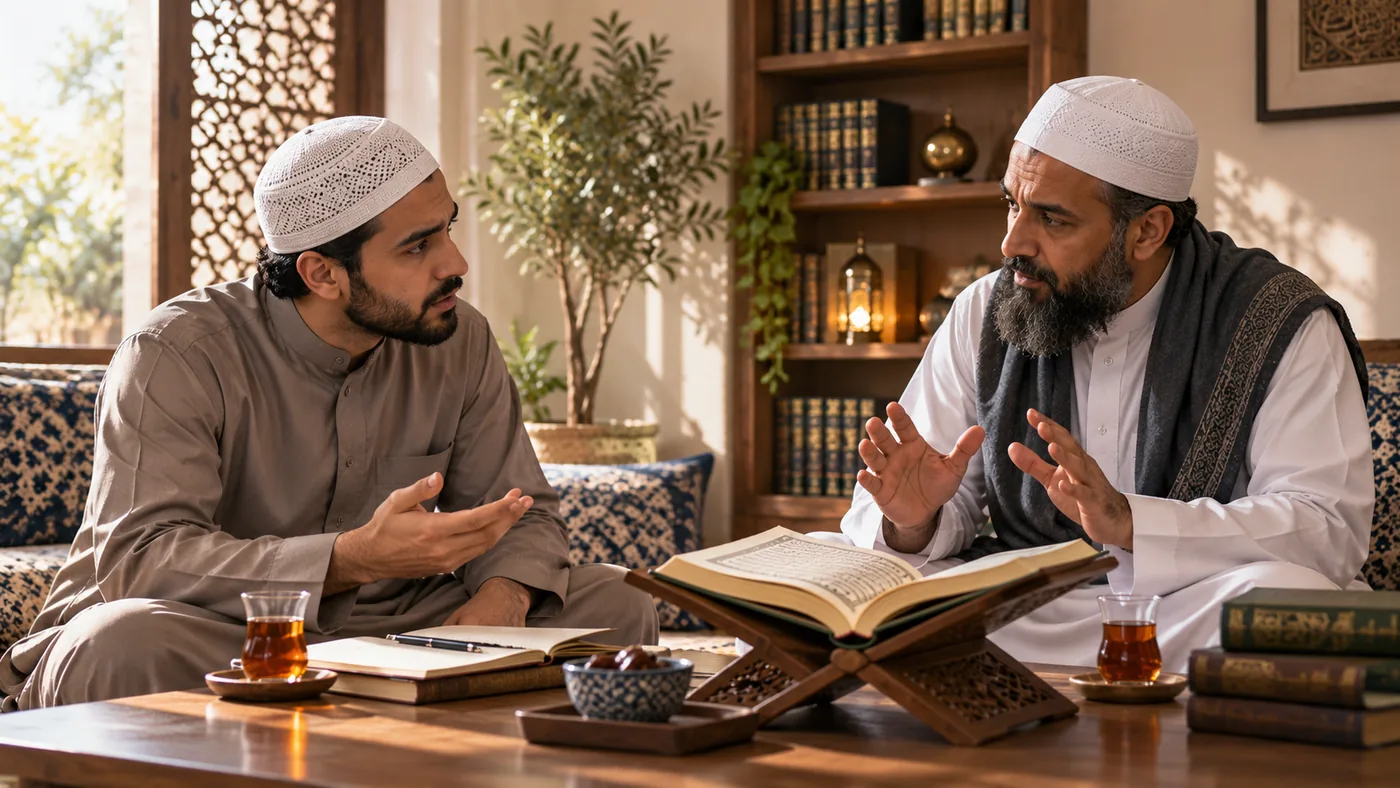
Islamic teaching about faith has to hold two truths together: Allah gives serious warnings, and He also opens the door of repentance and hope. A trustworthy article should not manipulate either side for a stronger headline.
This page keeps the original search intent but changes the standard: evidence first, clear explanation second, practical application third. Where the old version made a claim that could not be defended confidently, it has been removed rather than cosmetically reworded.
Primary references
- Qur’an 23:1–11 on qualities of successful believers and inheritors of Paradise
- Qur’an 4:13 on obeying Allah and His Messenger
- Sahih al-Bukhari 5673 and Sahih Muslim 2816: entry to Paradise is ultimately by Allah’s mercy
Begin with tawhid and the obligations
Paradise is not earned by a checklist divorced from faith. The foundation is worshipping Allah alone, following His Messenger ﷺ and fulfilling the obligations.
Good deeds are means, Allah’s mercy is decisive
Authentic hadith teach that no one enters Paradise merely because their deeds put Allah in their debt. Deeds matter deeply, while entry is ultimately by Allah’s mercy.
Ordinary character can be a road to Jannah
Truthfulness, guarding the tongue, kindness to parents, maintaining kinship and removing harm are not lesser Islam. The Sunnah repeatedly attaches enormous reward to everyday obedience.
Do not turn “24 ways” into guaranteed tickets
Each virtue belongs inside the complete religion. A single deed is not a licence to ignore prayer, persist in oppression or assume salvation is owed to us.
24 source-led ways to build a life aimed at Jannah
Tawhid
Worship Allah alone and die upon faith.
Five daily prayers
Protect the obligatory prayers and keep returning when you fall short.
Ramadan fasting
Fast the obligatory month with faith and hope for reward.
Zakah
Fulfil the right of eligible people in qualifying wealth.
Hajj when able
Perform the pilgrimage when its conditions apply.
Sincere tawbah
Return after sin rather than normalising it.
Truthfulness
Train speech away from lying and deception.
Kindness to parents
Serve them with respect and mercy.
Maintaining kinship
Do not cut relatives off over pride and minor disputes.
Good character
Treat people well when it costs patience.
Controlling anger
Strength includes restraint when provoked.
Guarding the tongue
Leave backbiting, mockery and harmful speech.
Charity
Give lawfully and without humiliation.
Feeding others
Care for hunger and need.
Beneficial knowledge
Learn and teach what is sound.
Qur’an
Recite, understand and act on revelation.
Dhikr
Keep the tongue connected to Allah.
Du‘a
Ask Allah for Paradise and protection from the Fire.
Patience
Stay obedient through difficulty.
Gratitude
Use blessings in ways Allah loves.
Justice
Do not let loyalty or hatred make you unfair.
Forgiveness
Pardon where it is right and do not feed every grudge.
Removing harm
Small acts of public good are still charity.
Allah’s mercy
Never treat deeds as if they put Allah in your debt.
Putting the teaching into context
Not every hardship is a punishment
The Qur’an describes believers being tested and the prophets endured severe trials. We therefore should not look at another person’s illness, loss or difficulty and confidently claim that Allah is punishing them for a particular sin.
Patience is active, not passive
Sabr can include seeking treatment, asking for help, setting boundaries and taking lawful steps to change a difficult situation. Endurance does not require a person to remain inside abuse, danger or preventable harm.
Hope and accountability belong together
Qur’an 39:53 closes the door to despair, while repentance still requires leaving the sin and repairing harm where possible. Mercy is not permission to persist, and warnings are not permission to tell repentant people that they are beyond forgiveness.
Practical application
Do not compare trials
A difficulty that looks small from the outside can be crushing to the person living through it. Islam teaches patience and perspective, but compassion requires listening before advising. Telling someone that others have it worse can silence them without actually helping them respond well.
Use both spiritual and practical means
Du‘a, salah, tawakkul and repentance belong alongside treatment, planning, legal action, financial advice or safeguarding where those are needed. Taking a lawful practical means is not a failure of reliance upon Allah.
Frequently asked questions
Does hardship prove Allah is angry with me?
No. The Qur’an and Sunnah show that believers and prophets were tested. We cannot claim the unseen reason for a specific trial.
Does patience mean doing nothing?
No. Sabr can include treatment, planning, seeking help and taking lawful steps to change a harmful situation.
Can major sins be forgiven?
Sincere repentance remains open during life. Some sins also require restoring the rights of other people where possible.
What to do next
Read the cited evidence in context, act on the part that clearly applies to you, and avoid building a personal ruling from a single translated sentence. For detailed fiqh or a situation with serious consequences, ask a suitably qualified scholar who can consider the full facts.