

A Muslim routine should support life, not crush it
When people feel motivated, they sometimes create a routine that would challenge a full-time student of knowledge: hours of Qur’an, long night prayer, dozens of adhkar and a complete lifestyle transformation from tomorrow morning. Three days later, the routine collapses.
A better beginner routine starts with obligations and adds small consistent acts around them.
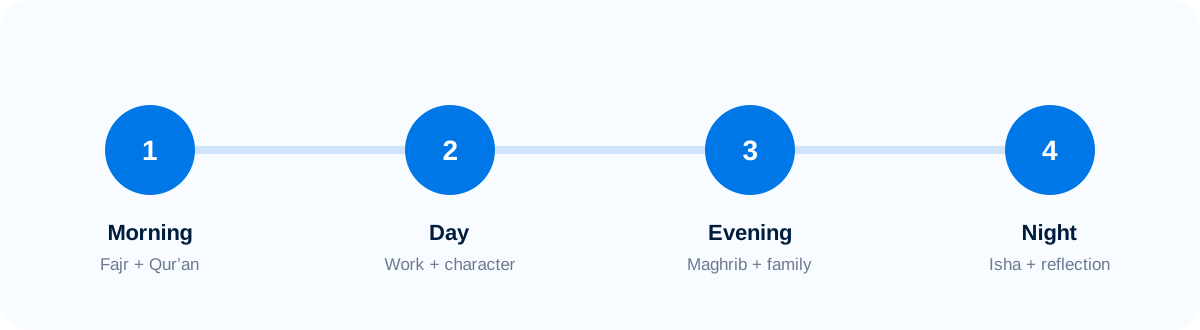
Morning: begin with Fajr
Wake for Fajr, make wudu and pray. If possible, spend five or ten minutes with Qur’an afterwards. Read a short passage and translation. Make morning dhikr as you learn it.
During the day: carry Islam into ordinary life
Islamic practice is not suspended while you work or study. Be honest, fulfil responsibilities, guard your speech and plan Dhuhr and ‘Asr rather than treating them as interruptions.
Evening: slow down around Maghrib
Maghrib can become a reset between the busy day and evening. Pray, spend time with family, review a short Islamic lesson or read Qur’an if morning was difficult.
Night: close the day with ‘Isha
Pray ‘Isha and avoid letting endless scrolling consume the final hour of the day. Make istighfar, review where you slipped and ask Allah for help with tomorrow.
Five habits are enough to begin
- Protect the five obligatory prayers.
- Read at least a small amount of Qur’an with meaning.
- Make personal du‘a every day.
- Practise one character goal.
- Sleep at a time that protects Fajr.
What if your schedule is chaotic?
Parents, shift workers, students and carers cannot all follow the same timetable. Use the prayers as anchors, then attach small habits to whichever prayer fits your life. For example: Qur’an after Fajr, a short lesson after Maghrib, istighfar after ‘Isha.
Track consistency, not perfection
A simple weekly checklist can help, but do not turn worship into a productivity obsession. The purpose is to worship Allah, not to admire a perfect habit tracker.
Add Sunnah gradually
Once the obligations are more stable, add optional worship in a way you can sustain. This might be the two Sunnah rak‘ahs before Fajr, morning and evening adhkar, or a regular charity habit. Do not add ten new practices at once.
Make your phone support the routine
Use prayer reminders, a Qur’an app and a notes list for du‘a. At the same time, reduce notifications that make focus harder. Technology can either protect or fragment your day.
Family routine
If you live with family, small shared habits can help: praying together when possible, ten minutes of Qur’an after Maghrib, or a weekly family reminder. Keep it warm rather than turning the home into a constant lecture.
When the routine breaks
Travel, illness, exams, a newborn or work pressure can change everything. Keep the obligations, simplify the extras and rebuild when life stabilises. A flexible routine survives real life better than a perfect one.
A sample low-pressure weekday
Fajr: prayer, one page or five verses of Qur’an, then prepare for the day. Dhuhr: prayer and a one-minute pause before returning to work. ‘Asr: prayer and a quick check of your mood and speech. Maghrib: prayer, family time and a short reminder or Qur’an reading. ‘Isha: prayer, istighfar, du‘a and preparing for sleep.
Weekend upgrade
Use one weekend slot for deeper learning, mosque attendance, family connection or charity. This prevents every beneficial activity being squeezed into already busy weekdays.
Routine should make you kinder
If your schedule becomes so packed with personal worship that family only receives irritation, adjust it. The purpose is a more obedient and balanced life, not a private productivity competition.
Build the routine around prayer anchors
Instead of creating a religious schedule with twenty new habits, use the five prayers as anchors. Fajr starts the day, Dhuhr interrupts work, ‘Asr prevents the afternoon from disappearing, Maghrib marks the transition into evening and ‘Isha closes the day.
A realistic weekday template
- After Fajr: prayer, a short portion of Qur’an and essential morning adhkar.
- Morning: work or study with clear intention and lawful conduct.
- Dhuhr: prayer and a short mental reset away from screens.
- ‘Asr: prayer, then finish responsibilities without carrying work endlessly into the night.
- Maghrib: prayer, family, food and reduced digital noise.
- ‘Isha: prayer, brief review of the day and bedtime protections.
When you work shifts or have children
A routine must fit real responsibilities. Parents, carers and shift workers may not have a quiet hour every morning. Keep the obligations stable and make optional habits flexible. Ten consistent minutes of Qur’an can be more sustainable than a plan built around a lifestyle you do not have.
Use your phone intentionally
Put prayer times where you can see them, remove unnecessary notifications and do not begin and end every day with social media. A phone can support worship or quietly break attention into fragments.
The minimum viable routine
On difficult days, protect five things: obligatory prayer, basic halal conduct, one small Qur’an connection, one sincere du’a and sleep sufficient to function. Then rebuild extras when capacity returns.
Continue: What to do when you feel spiritually low.
Morning and evening adhkar
Authentic morning and evening remembrance gives structure to protection and gratitude. Start with a small verified set rather than a huge graphic containing unsourced phrases. Surah al-Ikhlas, al-Falaq and al-Nas three times in the morning and evening are established in Sunan Abi Dawud 5082.
Food, work and family are part of worship
A Muslim routine is not only prayer blocks. Earning lawfully, feeding family, studying, exercising, resting and maintaining relationships can all support worship when done within Islamic limits and with good intention.
Night protection without fear
Before sleep, use established protections calmly. Ayat al-Kursi, the last two verses of al-Baqarah and the Mu’awwidhat routine are among well-known authentic practices. They should create trust in Allah, not a nightly fear ritual.
When travel disrupts routine
Keep the prayer times visible, learn the concessions that apply to genuine travel and simplify optional routines. A routine that survives travel is usually one built around priorities rather than perfection.
Make room for rest and halal enjoyment
A sustainable Muslim routine includes sleep, exercise, family, food and lawful recreation. Exhaustion is not a badge of piety. A routine that leaves you irritable, unhealthy and unable to fulfil responsibilities needs adjustment.
Use weekends for depth
Keep weekdays simple, then use one weekend block for a longer lesson, mosque class, family Qur’an time or reviewing what you learned. This creates depth without making every day overloaded.