

Prayer is learned, not magically known
If you are new to salah, please do not assume everyone else found it easy from day one. Prayer combines timings, purification, Arabic recitation and a physical sequence. That is a lot to learn at once. The best approach is to understand the structure, practise it and improve gradually.
The Prophet ﷺ told his companions to pray as they had seen him pray. This guide gives a beginner overview of the common core of the prayer. Small details can differ across recognised schools of Islamic law, so do not panic when you notice minor variations between trustworthy Muslims.
The five daily prayers
Each prayer has a time window. Qur’an 4:103 describes prayer as prescribed at appointed times. Prayer time apps and local mosque timetables are useful, but make sure the method used is appropriate for your location.
Before you begin
- The prayer time has entered.
- You have wudu, unless a different purification ruling applies.
- Your body, clothes and prayer place are clean from relevant impurity.
- The required parts of the body are covered.
- You face the qiblah, the direction of the Ka‘bah in Makkah.
- You know which prayer you are performing. The intention is in the heart. You do not need to announce a formula out loud.
If you have a personal situation involving illness, disability, menstruation, travel or another circumstance that changes how prayer is performed, ask a qualified scholar. This page teaches the standard beginner sequence.
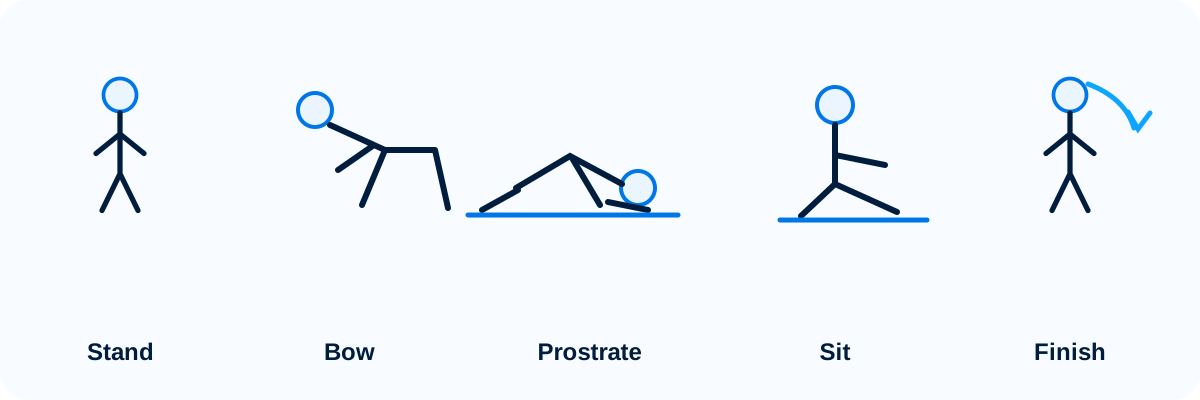
One rak‘ah, step by step
1. Stand and begin with takbir
Face the qiblah and stand if you are able. Begin by saying Allahu Akbar. This marks entry into the prayer.
2. Recite while standing
Recite Surah al-Fatihah. In the first two rak‘ahs of the obligatory prayer, another short passage or surah is commonly recited after it. Beginners often start by learning al-Ikhlas or another short surah.
3. Bow in ruku
Say Allahu Akbar and bow, keeping a stable posture. A common remembrance in ruku is Subhana Rabbiyal ‘Azim, meaning glory be to my Lord, the Magnificent.
4. Rise from bowing
Return to standing. The imam or person praying alone says Sami‘Allahu liman hamidah. Then say Rabbana wa lakal hamd, praising Allah.
5. First prostration
Say Allahu Akbar and go into sujud. The forehead and nose, hands, knees and toes are placed in the prostration position. A common remembrance is Subhana Rabbiyal A‘la, glory be to my Lord, the Most High.
6. Sit briefly
Rise from sujud and sit. This pause is part of the prayer, not simply a transition to rush through.
7. Second prostration
Perform a second sujud. This completes one rak‘ah.
What happens in the second rak‘ah?
Stand for the next rak‘ah and repeat the recitation, bowing and prostrations. After the second rak‘ah, sit for the tashahhud. In a two-rak‘ah prayer, this is the final sitting. In a three or four rak‘ah prayer, you stand again after the first tashahhud and complete the remaining rak‘ahs.
The final sitting
In the final sitting, recite the tashahhud and send prayers upon the Prophet ﷺ. Then finish the prayer with taslim, turning to the right and left and saying Assalamu ‘alaykum wa rahmatullah.
What should I memorise first?
Allahu Akbar
The transition phrase used throughout the prayer.
Al-Fatihah
The essential Qur’anic recitation in each rak‘ah.
Ruku and sujud dhikr
Short phrases of glorification while bowing and prostrating.
Tashahhud and salam
The sitting recitation and the ending of the prayer.
What if my Arabic is weak?
Start learning the required Arabic in small sections and use reliable audio to correct pronunciation. Do not let embarrassment stop you from learning. If you are a brand-new Muslim and still cannot recite what is required, seek practical guidance from a trustworthy local teacher about what to do while you learn.
Khushu: what should prayer feel like?
Khushu means humility, attentiveness and stillness before Allah. It does not mean your mind will never wander. When attention drifts, bring it back. Learning the meaning of al-Fatihah and the phrases you say can make a major difference.
Common beginner mistakes
- Trying to memorise everything before ever practising the movements.
- Rushing the positions so quickly that there is no calm pause.
- Panicking over small differences between trustworthy prayer demonstrations.
- Using transliteration forever without gradually improving Arabic pronunciation.
- Letting one missed prayer turn into giving up for the rest of the day.
- Learning from random clips without checking the source.
A simple way to learn this week
- Day 1: learn the names and times of the five prayers.
- Day 2: learn wudu and practise the movement flow.
- Day 3: focus on al-Fatihah.
- Day 4: add ruku and sujud phrases.
- Day 5: learn the tashahhud in sections.
- Day 6: practise a complete two-rak‘ah prayer.
- Day 7: review your weak points with a reliable teacher or resource.
Prayer is a relationship before it is a performance
The goal is not to look polished in front of people. Salah is repeated return to Allah. Keep learning the technical side, but do not lose the reason you are standing, bowing and prostrating in the first place.
- Sahih al-Bukhari 631, “Pray as you have seen me praying.”
- Qur’an 4:103, prayer at appointed times.
- Qur’an 5:6, purification for prayer.
- Qur’an 2:144, direction of the Sacred Mosque.